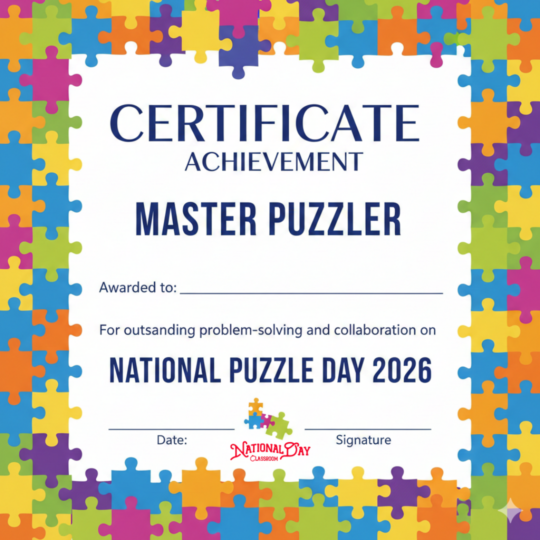
A structured lesson plan designed to be interactive, insightful, and a little bit “meta.”
Lesson Plan: The Missing Piece Perspective
1. The Hook: The “Incomplete” Gallery
Start by showing a famous image—like the Mona Lisa or a map of the world—with one distinct, jagged hole in the center.
- The Question: “Is the image still ‘The Mona Lisa’ if a piece is missing?”
- The Discussion: Lead the group to realize that while the subject remains identifiable, the integrity of the system is compromised.
2. The Mechanics: Systems & Interdependence
This is where we get into the “why.” You can use this simple formula to explain how complex systems work:
$$S = \sum_{i=1}^{n} p_i + C$$
- Where $S$ is the System, $p$ represents the individual pieces, and $C$ is the connection between them.
- The Point: If $p_i$ is removed, the sum doesn’t just get smaller; the connections ($C$) across the entire board begin to fail.
3. Activity: “The Essential Piece” Workshop
Have everyone (or yourself) identify a “piece” of their life or team.
- Step A: Draw a single puzzle piece shape.
- Step B: Inside, write a skill or trait you bring to the table (e.g., “The Planner,” “The Comic Relief,” “The Detail Checker”).
- Step C: On the back, write what happens to the “big picture” if that trait disappears.
- Example: Without the “Comic Relief,” the puzzle becomes too heavy and brittle; it loses its color.
4. The Twist: The “Negative Space”
Puzzles are defined by their gaps as much as their tabs.
- Reflection: Sometimes, we feel like a “missing piece” in our own lives (missing a goal, a person, or a skill).
- The Insight: In design, “negative space” is what gives an object its shape. What have your “missing pieces” taught you about the shape of your life?
A Quick Quote for the Board: > “A puzzle is not a collection of parts; it is a set of relationships.”
Part 1: The “Missing Piece” Logic Story
This is a short, narrative-driven puzzle where the solution isn’t found in the facts provided, but in identifying what isn’t there.
The Setup:
Five friends—Alex, Bea, Charlie, Dana, and Eli—were working on a massive 5,000-piece puzzle of the night sky. Each friend was responsible for one specific section: The Moon, The Milky Way, The North Star, The Comet, and The Nebula.
At the end of the night, one crucial piece was missing from the very center of the table. To find who was working near the “missing gap,” you must determine who handled which section:
- The person who finished The Moon sat directly across from Eli.
- Dana was not working on The Milky Way or The Comet.
- Charlie sat between the person who did The Nebula and the person who did The Moon.
- Bea finished her section, The North Star, and left the table before the piece went missing.
- The person working on The Comet sat to the immediate left of Alex.
The Challenge: Once you map out the table, you realize the “Missing Piece” wasn’t dropped—it’s the one thing none of these sections covered.
(Hint for the leader: The “Missing Piece” is the Darkness—the empty space that holds the stars together!)
Part 2: Reflection Prompts
These are designed to be used after the activity to “lock in” the metaphor. You can hand these out as a worksheet or use them for a group circle.
- The Individual Fit: “A puzzle piece has both ‘tabs’ (parts that stick out) and ‘blanks’ (parts that go in). What is a strength you have (a tab) that helps you support someone else’s weakness (a blank)?”
- The Missing Perspective: “Think of a time you judged a situation before you had all the facts. What was the ‘missing piece’ of information that changed your entire view of the ‘big picture’?”
- The Unique Shape: “Standard puzzle pieces are interchangeable in size, but jigsaw pieces are unique. If you were replaced by a ‘standard’ version of yourself, what specific ‘jagged edge’ of your personality would the team miss the most?”
- The Finished Product: “Why is a completed puzzle more satisfying than a box of loose pieces, even though the content is exactly the same?”
🔑 The Answer Key: The Midnight Puzzlers
Based on the clues provided, here is how the five friends were positioned around the table and what they were working on:
| Name | Puzzle Section | Logic Path |
| Bea | The North Star | Clue 4 explicitly states her name and section. |
| Charlie | The Milky Way | Clue 3 puts him between Moon and Nebula. Clue 2/5 narrow his section to Milky Way. |
| Alex | The Moon | Clue 1 & 5: Alex must be Moon to be across from Eli and right of the Comet. |
| Eli | The Comet | Clue 1 puts him across from Alex (Moon). |
| Dana | The Nebula | By process of elimination after Clue 2 and 3. |
The Visual Map (Clockwise):
- Alex (Moon)
- Bea (North Star)
- Charlie (Milky Way)
- Dana (Nebula)
- Eli (Comet)
The Moral Conclusion:
When all five friends connect their sections, they realize the “Missing Piece” in the center wasn’t a star or a planet—it was the Void/Darkness. Without that empty space, the stars would have no room to shine.
The Lesson: Sometimes what we perceive as a “hole” or “nothingness” is actually the structure that holds everything else in place.
🎨 Bonus: The Template Description
If you are doing the physical workshop, you can have your group draw this:
Instructions for the group:
- Top Tab: Write a skill you “give” to others.
- Bottom Blank: Write a area where you need others’ help.
- The Center: Write your name or a symbol of your identity.
Download the PDF Lesson including Student Certificate!